Medellín has the only Metro in Colombia and is rightly proud of it; it also has cheap taxis, tolerated ride apps and — in El Poblado — hills steep enough to change your plans. This is the practical guide to moving around the district and out to the rest of the city.
The Metro
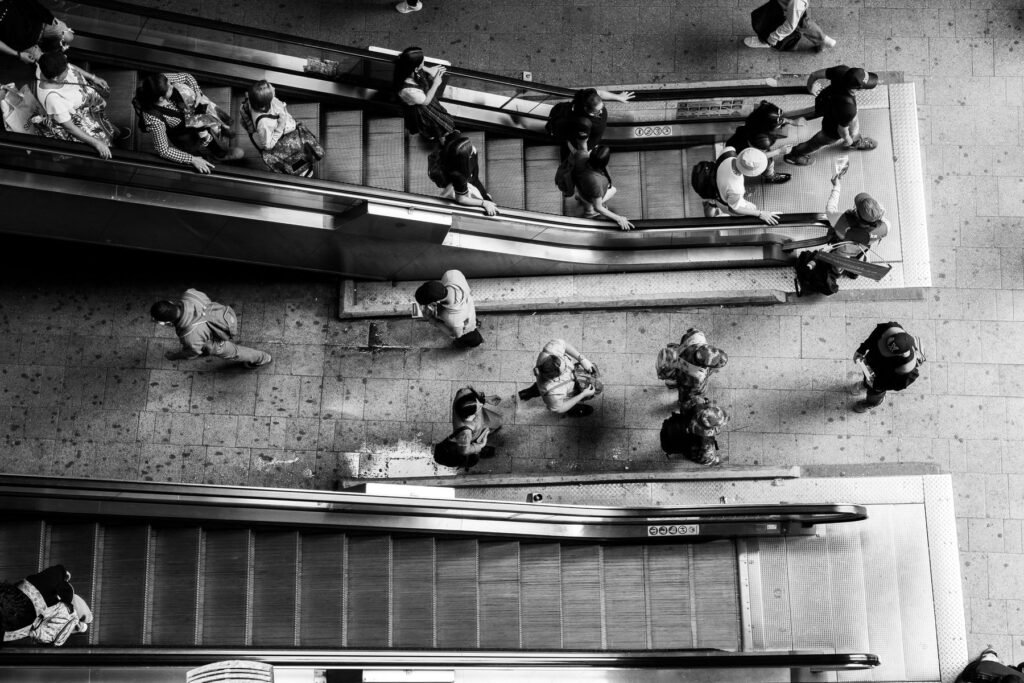
Two rail lines, several cable-car lines and a tram, all integrated. Line A runs north–south along the river; El Poblado station is your stop for the district (the nightlife is 15–20 minutes uphill from it — see how to get to Parque Lleras). Downtown (Parque Berrío, San Antonio), the Botanical Garden (Universidad) and the Comuna 13 escalators (San Javier, via Line B from San Antonio) are all a short ride.
Fares are paid with the Cívica card, a stored-value smartcard sold and loaded at station windows; cash and tokens are not accepted at the gates. Frequent-user cards get a lower fare; as a visitor you will pay the occasional-user rate, still only a few thousand pesos. Transfers to the Metrocable, tram and integrated buses are free within a 90-minute window — except for the Arví cable car (Line L), which has separate tourist pricing.
The Metro is clean, safe and busy; rush hour (7–9 am, 5–7 pm) is very crowded. It closes around 11 pm, which rules it out for getting home from the nightlife.
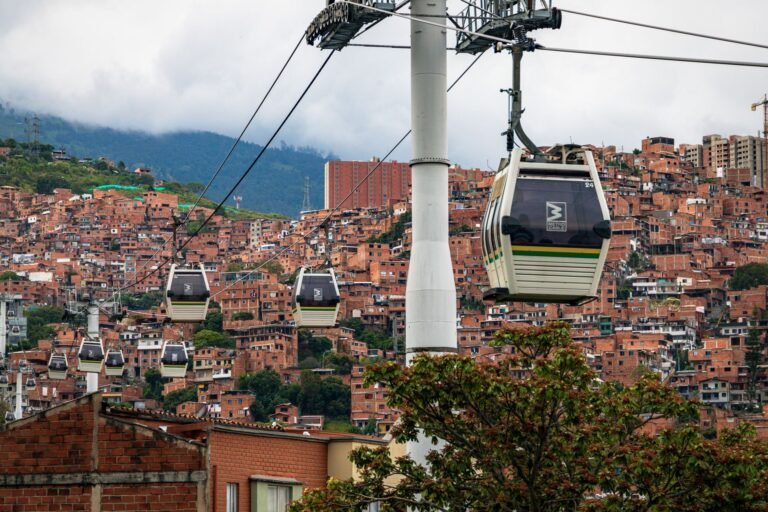
The Metrocable
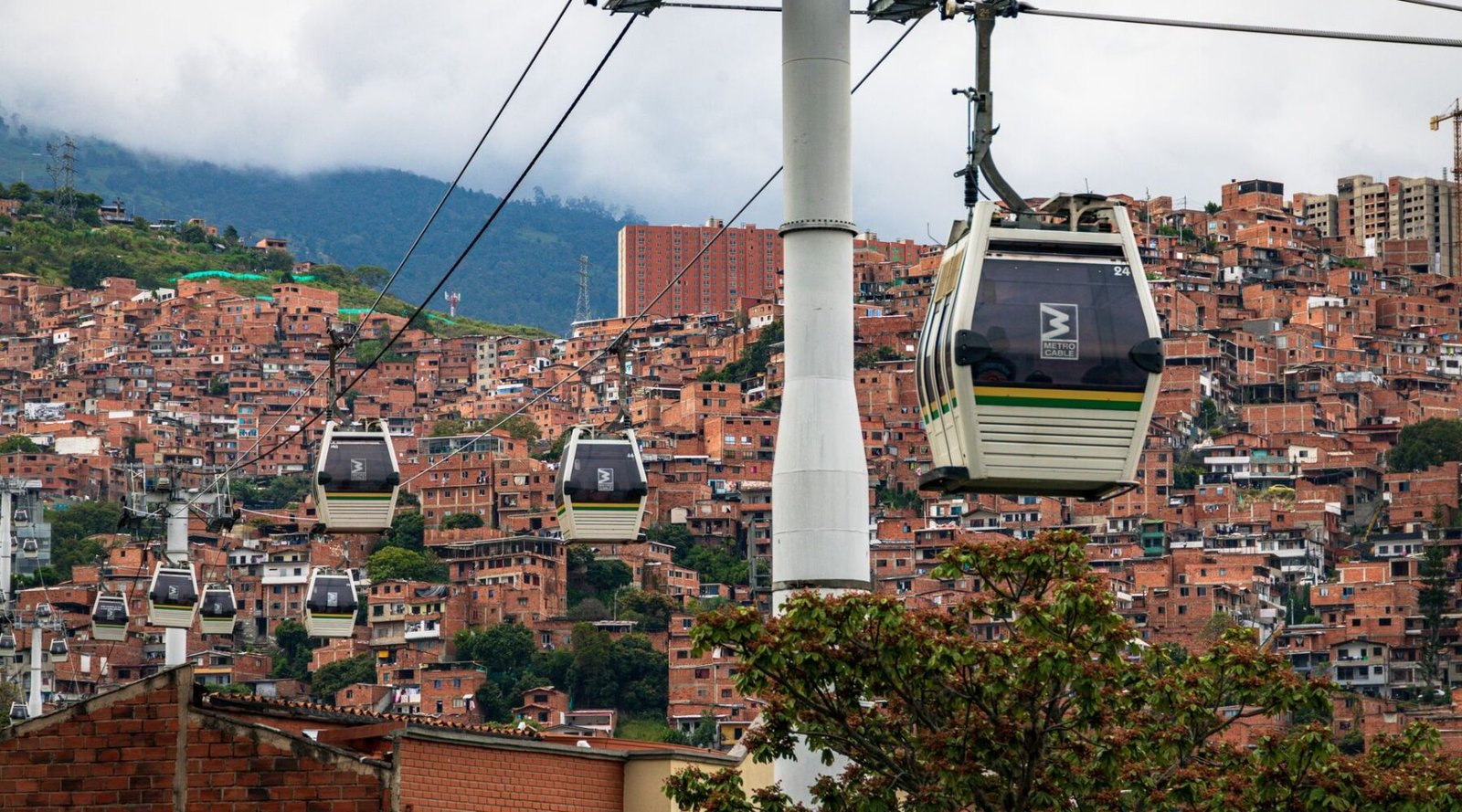
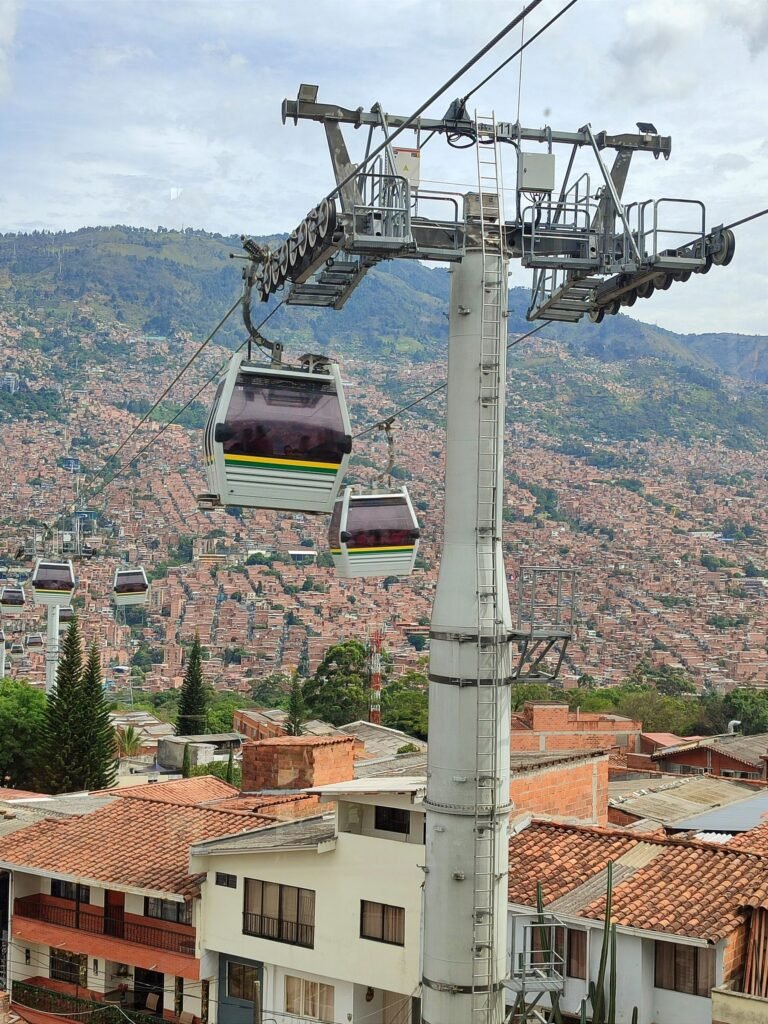
The cable cars that put Medellín on the urban-planning map. Line K (the original, from Acevedo up to Santo Domingo) is the classic ride over the northern hillside barrios; from Santo Domingo, Line L continues up to Parque Arví, a 4.6 km, 15-minute flight over the forest to the nature park on the plateau (runs roughly 9 am–6 pm; separate fare). Line J serves the western hills near Comuna 13. Other lines (H, M, P) serve residential areas and are less relevant to visitors.
Our sister site has the full Metrocable guide on Medellín.com, including Arví.
Taxis
Yellow, metered, plentiful and cheap: the minimum fare for a standard taxi is under COP 10,000, and most rides within El Poblado stay close to it. Cross-town — Poblado to Laureles or downtown — is typically in the COP 15,000–25,000 range depending on traffic. Hotels and restaurants will call one for you; the app-based and hotel-called options are the ones to use at night. Only authorised taxis are allowed into Parque Lleras’s controlled blocks.
Ride apps
Uber, DiDi and Cabify all work. Legally they are in a grey area — the courts have refused to shut them down and told the transport ministry to regulate them, which it has not yet done — so drivers may ask you to sit in the front seat and prefer cash-free payment. In practice they are reliable, priced close to taxis, and the default for many visitors.
Walking
El Poblado’s pavements are good and the district is safe to walk by day. The issue is gradient: from the Metro up to Parque Lleras is a real climb, and from the park up to El Tesoro is steeper still. Walk down, taxi up, and use Parque Lineal La Presidenta as the pleasant route between the park and the Santafé mall. Laureles, across the valley, is flat and has bike lanes — one of the reasons some visitors prefer it (see El Poblado vs Laureles).
Buses
Green feeder buses and the integrated system are cheap and extensive but not easy for visitors to decode. The one bus you may use is the Combuses airport shuttle (see airport to El Poblado). For everything else, the Metro plus taxis covers it.
Driving
Don’t. Traffic is heavy, parking is scarce, the “pico y placa” licence-plate restrictions are confusing, and taxis cost less than parking. For Guatapé and the countryside, take a tour or hire a driver.
Tours that handle the transport
 Metrocable included
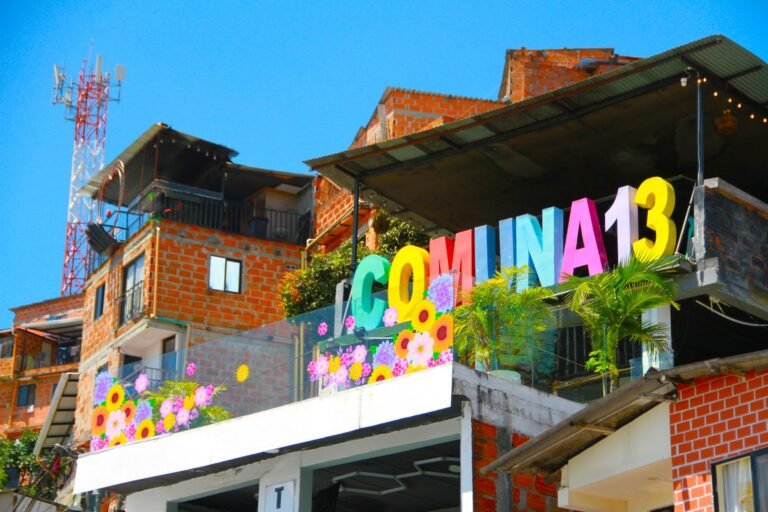
Comuna 13 tour with cable car ride
Poblado pickup, the escalators and a cable-car ride.
 Overview
Frequently asked questions
How much does the Medellín Metro cost?
An occasional-user ride is a few thousand pesos (roughly COP 4,000–4,500), paid with a Cívica card; frequent-user cards are cheaper. Fares are revised each January.
Do I need a Cívica card?
Yes — the gates do not take cash. Buy one at a station window with a small deposit and load it with credit.
Is Uber legal in Medellín?
It operates in a legal grey area: tolerated by the courts, not yet regulated. It works and is widely used; drivers may ask you to sit in front.
Can I take the Metro to Parque Lleras?
To El Poblado station, yes; then it is a 15–20 minute uphill walk or a five-minute taxi to the park.
How do I get to Comuna 13 from El Poblado?
Line A to San Antonio, Line B to San Javier, then the escalators — about 40 minutes. Or take a tour with Poblado pickup, which most people do.
One email with the short version — where to stay near the park, what to book first, and the safety habits that matter. No spam, unsubscribe any time.